The Odyssey Lecture 1
Lecture Notes · Session I
On Homer's Odyssey
Paul Cantor · University of Virginia
From Achilles to Odysseus: A New Kind of Hero
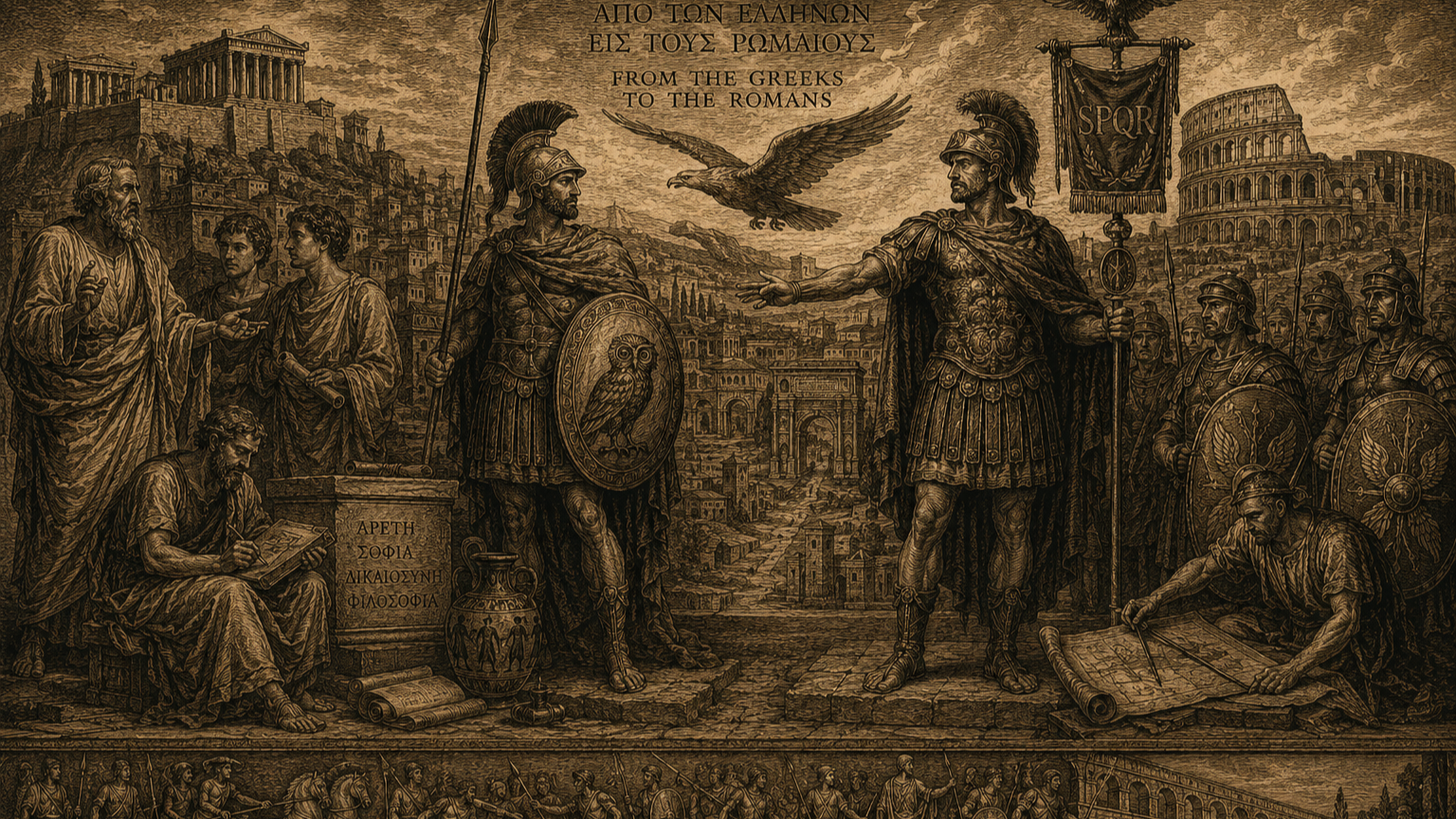
The move from the Iliad to the Odyssey is a move from Achilles to Odysseus as hero — from a more obvious to a more subtle and interesting type of hero. This doesn't mean leaving the Iliad behind; the course will keep coming back to it, since that is the whole point of comparative literature. The Odyssey helps define what is distinctive about the Iliad, and vice versa. This is another binary opposition: Achilles against Odysseus.
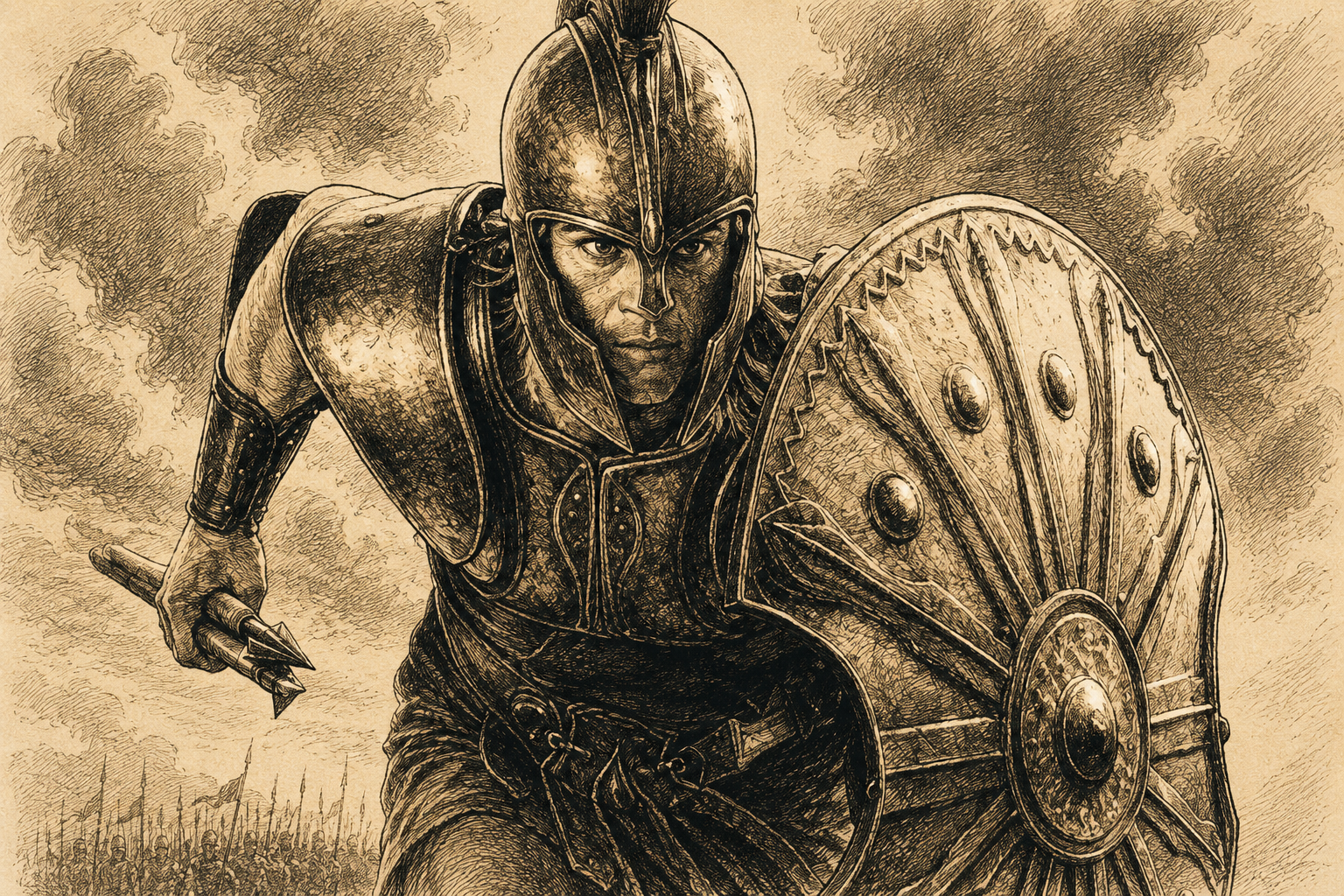
Achilles represents the primary kind of hero — a type found in every culture, the great warrior who can defeat anybody, who can beat up anybody on the block. His heroism rests on physical prowess, on simply being stronger and tougher. This type persists to this day in our movie heroes and superheroes. Homer's Achilles is more subtle than Superman — indeed, Homer gives perhaps the noblest version of this type — but it is still related to today's superheroes, and to what people ordinarily understand as heroic. We have developed more sophisticated notions of heroism since, but we have never fully lost touch with this basic concept. Still, we have to work to get back to Homer's own idea of virtue, since we keep thinking of virtue as moral virtue. There is nothing virtuous about Achilles in that sense. His is a purely physical excellence — we feel like saying Achilles doesn't deserve much credit for it, since he was simply blessed with a great physique. We can't even say he worked out at the gym; he was never a ninety-pound weakling who built himself up. He was born a hero — in our terms, it's all in his genetic makeup. Homer would put it differently: a god gave him his power. But Homer doesn't much care about that distinction — it is simply a matter of excellence, whether inborn or not, and Achilles is a remarkable specimen of humanity.
This appeals to a very basic human desire: to be able to triumph physically over anyone else. Talk to adolescent boys about it. Nietzsche, in The Will to Power (§918), puts it memorably: you would make a young boy stare wide-eyed if you asked him, "Would you like to become virtuous?" — but his eyes would light up if you asked instead, "Would you like to become stronger than your friends?" For Homer, those two questions are one and the same. Nietzsche was a professor of Greek and knew perfectly well that for the ancient Greeks, "virtuous" basically meant "stronger." To glimpse the world of Homer, look at the world of adolescent boys in a schoolyard.
There is something childlike about Achilles and about the Iliad as a whole — it shows us a world of elemental passions, almost pre-civilized without being barbaric. "Civilized," after all, means being able to live together in a city, and Homer shows us men who haven't quite been forced into communal existence; they insist on standing on their own. You can hear it in the way they speak — they resist compromise, show little sense of tact. That will turn out to be the crucial difference with Odysseus, who has a real sense of tact. There is an incredible directness throughout the Iliad — listen, for instance, to Priam's speech near the end of the poem. By our standards, Priam doesn't show sufficient concern for the feelings of his remaining children; he says exactly what he feels, not what he ought to say. This is part of what makes the Homeric world so attractive — it shows us life before all the compromises demanded by civilization and society, something like the eternal childhood of humanity. But it is also what makes that world so problematic: you cannot build a community out of men like these. Homer shows us the destructiveness of his heroes, including their self-destructiveness — which is exactly why the shift to the Odyssey matters so much.
The Shield of Achilles: A Fuller Picture of Life
The shield of Achilles offers a fascinating commentary on the Iliad itself — almost an attempt at self-summary. It depicts two cities, a city at peace and a city at war, forming something like a mini-Iliad in miniature. Homer here shows us a work of art in which the Iliad itself would form only half the picture. A full picture of life would have to show more: it would have to show war in the context of peace, heroism in the context of ordinary life. This is part of the role played by similes throughout the poem — they keep reminding us of everyday human activity, farming, fishing, the whole texture of ordinary existence. The shield portrays human life within the larger context of nature, within a sense of the whole cosmos.
The shield reminds us that there is a world larger than the Iliad itself — and points to a real paradox of heroes: they fight on behalf of human beings they privately consider lesser than themselves. The andres, the heroic men, fight for the anthropoi, ordinary humanity. Tolkien makes a closely related point in his Letters: without the high and the noble, the simple and the vulgar becomes utterly mean; without the simple and the ordinary, the noble and heroic becomes meaningless. The Lord of the Rings may be the most Homeric work of the twentieth century in exactly this sense — think of the relation between the hobbits and Aragorn, between anthropoi and aner. Tolkien wants to show how heroes stand above ordinary human beings, but heroes also need something to fight for; it's no good if they simply fight for themselves. The he-men have to fight for ordinary human beings — Aragorn fights for the hobbits, to make their ordinary world possible. Heroes need human beings, if only for the sake of fame; they need poets, in order to receive kleos, glory through song. Poets themselves don't have much of a formal role within the world of the Iliad — in this world of warfare, Homer can't really show his own role in the poem; instead the heroes end up singing their own deeds, as Achilles and Patroclus do. In the Odyssey, poets begin to have a real role of their own. Storytelling itself becomes important — many of the poem's "deeds" are accomplished through the telling of stories. And telling stories, in Odysseus's case, turns out not to be too far removed from lying. This requires a whole new set of skills in a hero — the aner can no longer be everything.
The key to the Odyssey is that it is more like the shield than like the Iliad itself: it shows us a fuller picture of human existence, heroism set in relation to ordinary human life.
Two Poems, One Tradition
Turning now to the Odyssey properly, and developing these points further: the Odyssey is very much a companion poem to the Iliad — the language and style are extremely close in the original Greek, in diction, in similes, in epithets, which is why for centuries most readers assumed both poems were written by the same author. The question of authorship remains much disputed and very complicated. The ancient view was that Homer composed the Iliad when young and the Odyssey when old — there is indeed something more mature about the Odyssey, the product of a more reflective sensibility. In any case, what is clear is that the Odyssey comments on the Iliad; whoever composed it had the Iliad very much in mind.
Demodocus and the Alternate Iliad
Book VIII, featuring the poet Demodocus, points to one of the real differences between the two poems: as the gods withdraw, human contact with them becomes less direct, and we now learn of the gods largely through poets. This gives poets a new importance. Heroes used to serve as intermediaries between human beings and the gods; now it is poets who serve that function — the gods no longer speak directly to ordinary human beings. This is a distinctly post-war world: the Trojan War is fast becoming a memory, and we can watch legends arising in real time, pointing toward the ultimate origins of the Homeric poems themselves in songs roughly contemporary with the war (recall Munro's Law here). Through Demodocus, Homer suggests an alternate Iliad, dwelling on different incidents — a quarrel, for instance, between Achilles and Odysseus, rather than between Achilles and Agamemnon. What could that quarrel have been about? A hint comes in Demodocus's third tale, about the Trojan Horse — a story Homer could not tell within the Iliad itself, since it would detract from Achilles's glory. In the end, Troy was conquered not by Achilles's brute force (bie) but by Odysseus's cleverness (metis) — his brilliant stratagem of the wooden horse.
Metis versus Thumos: Intelligence and Force
Achilles is the hero of pure force, of superhuman strength — what makes him seem almost like a god. But he was never able to conquer Troy on his own. Odysseus has some of that same strength, but what really distinguishes him is intelligence. It is characteristic that Odysseus excels at archery: archery still requires strength, in bending the bow, but it is a different kind of strength, involving more skill and less direct confrontation — more like trickery than face-to-face combat (and, notably, archery is the way Achilles himself is eventually killed). Intelligence is a more distinctively human quality; it is not part of manliness as such, not part of being a he-man — think of Ajax, the proverbial dumb ox. Nor is intelligence specific to one sex — Athena, after all, is the goddess of intelligence — though we still tend to think of it as a distinctively human characteristic. In Greek this quality is called metis, and it carries a real sense of wiliness, a willingness to deceive, even to lie outright. It tells us something about the Greeks that they saw something faintly suspicious about this quality and yet admired it enormously.
Achilles Repudiates His Own Choice
The Odyssey works to put Achilles in his place, suggesting an alternative ideal. In a remarkable moment in the underworld, Achilles actually repudiates his own famous choice — he now says he would rather be a poor man's slave and alive than lord over all the dead. This shows how genuinely unattractive the afterlife was to the ancient Greeks — even the greatest of all heroes ends up in a miserable situation. It suggests real limitations in the conventional heroic ideal, which lands you, in the end, in an empty death. (Homer still clearly admires that ideal — Achilles soon returns to his old pride, asking eagerly after his son.) The Odyssey qualifies or complements the Iliad; it does not repudiate it. The Odyssey isn't trying to put Achilles down so much as trying to put him in his proper place — suggesting that there are other kinds of heroism as well.
Literary history is not like scientific history, where new discoveries genuinely refute old ones — Copernicus really does refute Ptolemy. The Odyssey does not refute the Iliad in that way. In some sense the Iliad embodies a permanent truth, because it reveals as fully as anything ever has a permanent human possibility: the glorious but tragic life of the great warrior. As long as human beings have war, we will admire the warrior. Other works of literature may reveal other human possibilities, but they do not thereby refute the Iliad — they only add to our understanding of what is humanly possible. This course, in other words, is not tracing a story of progress in literary history. It may look like a grand narrative, moving from one work to another, but it is not a story of improvement. The Iliad is as great as any work of literature ever written, with a few exceptions among the Greek tragedians — and it is remarkable that it stands right there at the very beginning of literary history.
The Cyclops Episode: Odysseus as a New Kind of Hero
The Cyclops episode shows us clearly what is distinctive about Odysseus as a hero. What provokes the whole episode is Odysseus's curiosity, mixed with an element of pride — in this respect Odysseus is not entirely unlike Achilles. This curiosity gets him into serious trouble, but he also knows how to lie his way out of trouble; Odysseus always has a lie ready. Compare Achilles, who says elsewhere in the poem — in Odysseus's own presence, no less — that he hates like the gates of death the man who says one thing and hides another in his heart. Achilles would rather die than lie.
A key moment comes when Odysseus controls his thumos, his spirited anger, putting intelligence ahead of it — a hero addressing his own heart, the seat of thumos for the Greeks, and reasoning his way past his own rage. This tempers his heroism with rationality. Consider how Achilles would have reacted in the same situation: with Polyphemus killing some of his men, Achilles would simply have killed Polyphemus on the spot, with no thought given to how to escape the cave afterward. The "Nobody" ploy is typical of Odysseus and quite atypical of Greek heroes generally — there's even a pun buried in it, since "Nobody" (outis) echoes metis. Odysseus is willing to become a nobody, at least for the moment. In the Iliad, by contrast, heroes are constantly proclaiming their names and their lineage; Odysseus, for now, would rather save his life than his name. He thinks his way out of the cave in a maneuver that replays the Trojan Horse — sneaking out this time, instead of sneaking in.
But notice that Odysseus is still very much a Greek hero underneath it all — what good is a trick if no one ever learns you played it? His pride flares back up as he sails away, and he starts sounding like a conventional Homeric hero again, proclaiming his ancestry the way heroes always do. This is exactly what causes all his subsequent trouble, angering Poseidon — he virtually gives out his home address, as if daring Poseidon to come and get him. Odysseus, then, is not entirely unlike Achilles after all. Achilles is comparatively one-sided next to Odysseus, developing thumos to its absolute peak — he is the most spirited man imaginable, magnificent, but liable to get out of hand. Odysseus doesn't lack thumos either, but he has something more besides: a broader, fuller humanity, intelligence added to spiritedness.
In some ways the Odyssey may be even more distinctively Greek than the Iliad. Most cultures have a hero like Achilles — the big, strong guy who wins every battle: think of Beowulf, or Samson in the Old Testament. Far fewer cultures have a hero quite like Odysseus, so thoroughly defined by trickery. The type is not confined to the Greeks — there are trickster figures across many mythologies, among Native American traditions, for instance, or Wile E. Coyote in more modern folklore — but this figure is usually presented in a much more dubious light, closer to a devil. Loki, in Norse mythology, is a good example; Thor is the poem's big, dumb, strong hero instead. The Greeks, distinctively, come to love Odysseus's wiliness — another example of a virtue that is not a moral virtue in our sense. It's hard to say, in English, "it's virtuous to lie" — but Odysseus's real excellence is precisely his ability to lie well.
Imperialism and Civilization
There is more to the Cyclops episode still. Odysseus can be seen as an emblem of Western man, and the episode itself is a prototypical scene of civilization confronting barbarism, in a distinctly imperialist context — the Odyssey is, among other things, a poem of the Greek imperialist spirit, with both its good and its bad aspects visible at once. Odysseus's curiosity and his will to power turn out to be closely connected — to know the world is already, in some sense, to conquer it.
Homer, however, always shows sympathy even for his monstrous characters, and invites us to look at the story from Polyphemus's own point of view as well: Polyphemus is simply minding his own business when these Greeks show up uninvited and end up blinding him. It is a prototypical imperialist encounter — the Greeks arrive wanting to make off with Polyphemus's cheese, and end up looting his home outright. This points ahead to various later Greek imperial ventures — Athens, Alcibiades, Alexander — the eventual fruit of a civilization raised on the Iliad and Odyssey. (This is not unlike the status of the Bible, though not quite equivalent — think of a civilization raised on the Old and New Testaments, and then think of one raised instead on the Iliad and Odyssey.)
At the same time, we shouldn't pin the invention of imperialism on the West specifically — imperialism long predates the West and seems to be coeval with humanity itself. The Greeks themselves were constantly threatened by empires from the East — Troy, Persia, and eventually the Ottoman Turks, who conquered and ruled them. The Greeks were as much victims of imperialism as they were beneficiaries of it. Still, we can clearly see an imperialist spirit at work in the Odyssey — and what is most interesting is how tightly that spirit is bound up with exactly the qualities we think of as the distinctive Greek virtues, themselves bound up with civilization as such.
Love of Home, Love of Travel
The Odyssey combines a deep love of home with an equally deep love of travel — it is the epic of a seafaring people, and the Greeks were spread all across the Mediterranean and the Black Sea. The poem dramatizes a real Greek fascination with the exotic. There are two sides to Odysseus: he loves home, but he also wants to get away from it. Later versions of the story pick up exactly this thread — Odysseus, not fully satisfied even back in Ithaca, sets out on one last voyage, as in Dante, and later in Tennyson's poem "Ulysses." Odysseus's own words, in a story he invents about himself (revealing something true even in the act of invention), hint at a motive of simple commerce — join the Greek navy and see the world, not all that different, in practice, from piracy. The Greeks were a seafaring people, and remain one to this day, living by the sea. The Odyssey is the epic of a maritime, commercial people who sail all over the known world — the Iliad, by contrast, is a fundamentally land-based poem. A sea-based epic like the Odyssey is actually fairly rare among epics generally.
There is a real sense of human diversity running through the poem — Homer is fascinated by the sheer range of human customs, a range arguably greater than we are accustomed to acknowledging today. (One often hears people say we must turn away from Homer in order to learn about diversity — in fact there is more human diversity on display in Homer than in all of contemporary literature combined.) The human condition, once again, is defined here through binary oppositions, poised between extreme civilization and extreme barbarism — the Phaeacians against the Cyclopes.
Phaeacians and Cyclopes
The Phaeacians represent hyper-civilization — perfectly safe, protected by the gods, walled off from the world by the sea, and so able to afford real kindness to strangers: something like a utopia. In Book VIII, all conflict among them is purely athletic, much like Book XXIII of the Iliad — thumos fully sublimated into athletic competition (though even there, a fight very nearly breaks out).
The Cyclopes represent the opposite extreme, barbarism — hostile to strangers, lacking any sense of hospitality, which counts as an especially serious crime for a seafaring people. Polyphemus is an extreme version of the aner, standing entirely alone in the manner of Homeric heroes — primitive, pre-political; the family, not the city, is his only unit of organization, and the Cyclopes barely come to one another's aid, living instead a purely tribal existence. They have no arts at all — notably, they don't build ships, and shipbuilding was one of the truly great arts for the Greeks, whose ships were remarkable technological achievements for their day. The Cyclopes are impious and have never even heard of the Trojan War; in some ways they act the way Iliad heroes do, with a similar contempt for the gods. (There is a real tendency here to regard the Other as barbaric — though it must be said the Cyclopes really are cannibals.) Homer is working to define the right course for human beings, steering a middle path between these two extremes. Notably, the poem tells us that the Cyclopes and the Phaeacians used to live right next door to each other, and that both peoples are especially favored by the gods — which suggests that neither extreme represents an ordinary human possibility.
From the Aner to the Anthropos: A Wider World
The Odyssey opens onto a much wider world than the Iliad. The Iliad looks narrowly at the world of heroes — Greeks and Trojans alike worship the same gods. The Odyssey, by contrast, shows us people who don't worship the gods at all, alongside people who live in far closer touch with them than ordinary humans do. The Iliad focuses on the aner, the heroic man; the Odyssey widens its view to take in the anthropos, humanity as such. In the wake of the Trojan War, the world has genuinely opened up, precisely because the old order has broken down. This is a world full of strangers, which is why hospitality matters so much throughout the poem — how do you treat a stranger? As seafarers, the Greeks were constantly coming upon new and unfamiliar worlds, never quite sure what to expect. You might be invited to dinner without knowing whether you're the main guest or the main course. The Odyssey reflects the real historical experience of the ancient Greeks as great explorers of the Mediterranean and the Black Sea.
Rising Above Nature: Beast, God, and Human
The properly human emerges from the encounter with both the subhuman and the superhuman. What defines the human is struggle, effort — beasts and gods alike don't struggle the way human beings do; the human condition means rising above mere nature. The deepest threat Odysseus faces throughout the poem is never simple danger, but rather ease and pleasure. The Odyssey is, in large part, about renouncing pleasure, about reason rising above the passions. Odysseus has to learn to control both eros and thumos. This is quite different from Achilles's kind of heroism, which requires struggling against external opponents; Odysseus instead has to struggle mainly with himself.
The first real threat he faces is the Lotus Eaters, representing something like humanity's primitive condition — living directly off the fruits of the land, hunter-gatherers with no work to do at all. This is very much an imperialist poem in this respect, looking ahead to the great appetite for empire among fifth-century Greeks, and reflecting a real fear of "going native," of regressing to a more primitive stage of humanity — not unlike nineteenth-century European fantasies about Polynesian islands (Tennyson, notably, also wrote a poem called "The Lotos-Eaters"). The Cyclopes represent one step above the Lotus Eaters — they are shepherds, though still not farmers. You can almost trace stages of human development across the poem: first hunter-gatherers (an Edenic stage), then shepherds (like Cain), and eventually farmers (like Abel).
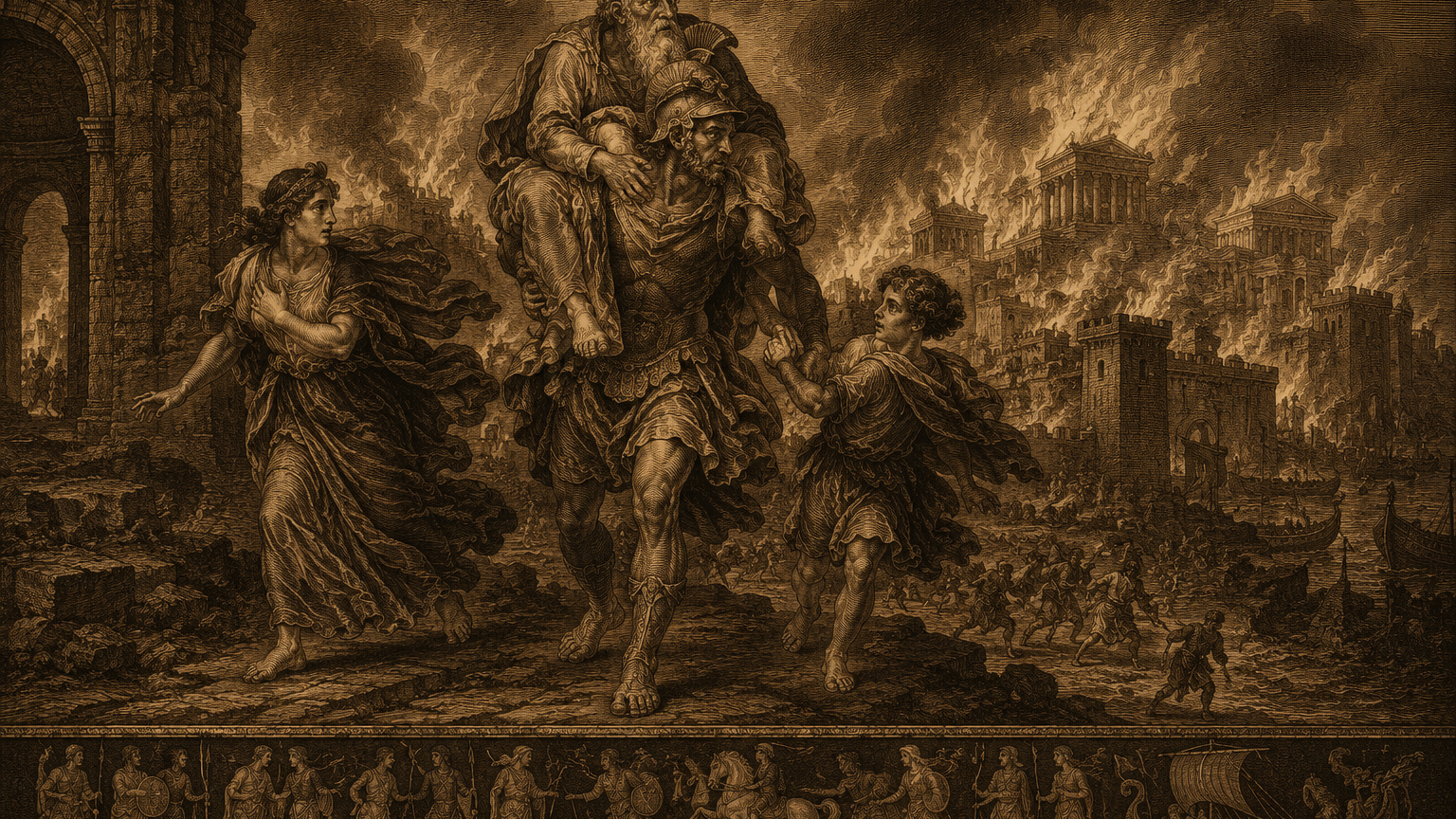
The Odyssey, in this sense, is a great statement of the work ethic — not quite the Protestant ethic, but heading in that direction, and closer than the Iliad to our own idea of moral virtue. Odysseus does seem to make what we would recognize as moral choices — though not quite; the poem itself is not Christian. But we do get here, for the first time, the notion that one has to strive to be heroic — heroism does not come as naturally to Odysseus as it does to Achilles. For Achilles there is no real conflict between pleasure and virtue; his virtue simply is killing people, and he happens to enjoy killing people. For Odysseus, the great threat is never a superior opponent but various forms of temptation, luring him away from completing his mission — a theme that looks ahead to Aeneas, where Virgil brings us even closer to a fully modern idea of virtue. Odysseus is constantly facing temptations of exactly this kind — the Sirens being the most powerful example, luring him away from his course.
(Odysseus might be called the hardest-working man in the hero business. There is a well-known Marxist reading of this material, from Horkheimer and Adorno, which emphasizes the theme of labor running through the poem: the Sirens episode becomes a powerful emblem in which workers must have their ears shut against pleasure while the boss stays chained to his post, rising above the senses — you can hear the Sirens' song but never touch it; it becomes a purely aesthetic object for Odysseus. This is an extreme interpretation, but it has some real validity.) The general point stands: pleasure enslaves humanity, dragging it down toward a subhuman condition. In the Circe episode, men are literally transformed into beasts, and Odysseus himself is tempted to linger with Circe — he has to learn to control eros here just as he had to control thumos with the Cyclops. The various enemies Odysseus faces are all, in one way or another, forms of the subhuman or the superhuman trying to turn him into something other than fully human — trying to drag him back down into mere nature as a beast, or else to elevate him into something like a god. Circe manages to do both at once.
Nature itself, in this stretch of the poem, becomes associated with one particular kind of woman, luring Odysseus away from his task — though it's worth remembering that his task is precisely to return to another woman, and that he receives crucial help along the way from a goddess; the poem is not simply anti-female. It also contrasts political and non-political forms of life — notice the incest among the Aeolians, a self-contained world organized entirely around family. The poem does recognize real value in family life (it is, after all, exactly what Odysseus is striving to get back to), but family can also get out of hand. The hero has to leave his family behind, has to get out from under its domination and achieve something on his own, before he can meaningfully return to it. We see something similar in Telemachus at the beginning of the poem, who has to escape his mother's apron strings — though there isn't time in this course to look closely at Telemachus's own story. It is, in its own right, a coming-of-age story: how does a boy become a man?
There is something genuinely claustrophobic running through all the threats Odysseus faces — being devoured, shut up in a cave, kept in bed no matter how pleasant the company — never being allowed to pursue his own course, to get back out into the world, to develop, to become human in the fullest possible sense.